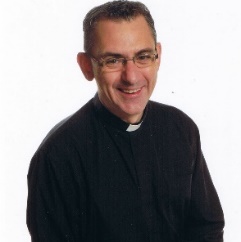
Rector’s Letter
As the leaves begin to fall and the nights draw in, we mark the festival of St Michael and All Angels and approach ‘Feast time’ in our church calendar. Traditionally, the celebration of Houghton Feast over a 10-day festival is a wonderful opportunity for our whole community to come together. We look out at a wider world that so often tells us to be divided, surrounded by voices that emphasize our differences and push us toward fragmentation. But here in Houghton, we are choosing a different path. This year’s theme, “Together We Feast,” echoes the legacy of my historic predecessor, Rector Bernard Gilpin. In the sixteenth century, Gilpin regularly declared his rectory an ‘open house’, offering free food and warm hospitality to all who visited, regardless of their wealth or status. Gilpin understood a radical truth: the Creator of the universe didn’t arrive in a pristine palace but was born into a messy stable for our sake. God loves us so much that he was prepared to walk to the cross—and beyond—for us. His answer to a fractured world isn’t a fortified wall; it is an open, radically inclusive table. To embrace this during the Feast, we are launching an unbroken, 24-7 canopy of prayer inside the church. We have set up seven interactive prayer stations to take prayer out of our heads and put it into our hands. You are invited to move around the building and physically engage with these stories that matter:
- At the ‘Dragons Door Arch’, you can tie a ribbon across a wooden frame to build a bridge
where there is division in our world or your life. - In the South Transept, you can leave a heavy stone of hopelessness in the sand at the feet
of the ‘Risen Christ’, trusting that the stone is always rolled away and the story doesn’t
end in the dark. - By ‘Bernard Gilpin’s Tomb’, you can reserve a seat at an empty table for the outsider,
honouring Gilpin’s legacy of radical inclusion. - At the ‘Font’, you can dissolve a written lament for our groaning, warming planet into the
water, a place that continually reminds us of God’s deep, relentless love and protection. - In the ‘North Transept’, you can map your ‘magic moments’ of our local community by
adding a heart to our fabric map and share your own story before God. - At the ‘Nave Altar’, you can add a brick to a communal Lego cross. Just as we did at a
recent All-In service, this acts as a powerful, visual reminder that we are not on our own,
but are part of something significantly bigger. - Finally, at the ‘High Altar’, you can tear off a piece of crusty bread from our chaotic,
vibrant banquet table as a reminder that we all feast together.
During this Houghton Feast time, we’re reminded that we are called to reach out to those
around us. I warmly invite you, your friends, and your neighbours to step through our doors.
Participate in the ‘stations’ or simply come in to sit in the quiet. By ‘Feasting’ together as a
diverse community, we build bridges and celebrate the beautiful tapestry of our town and
our region.
With my prayers and very best wishes.